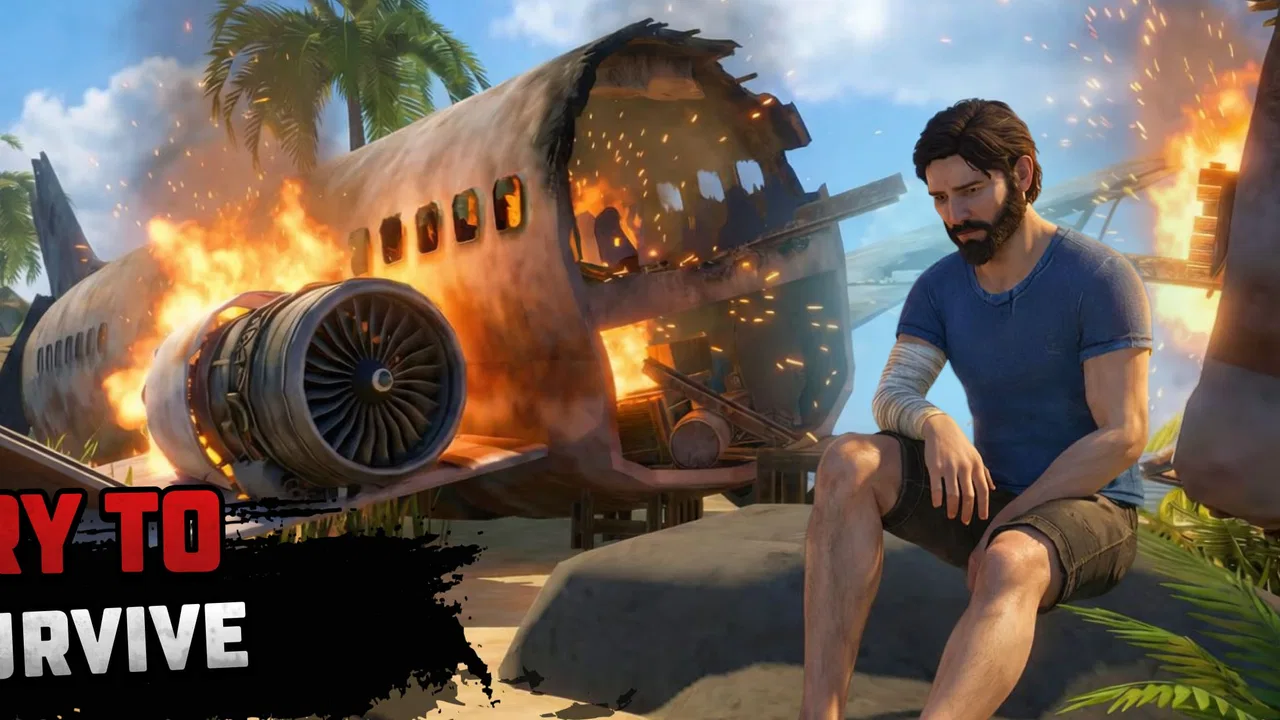
Raft® Survival - Ocean Nomad
- 4.3
- Rating
- 100.00M
- Installs
- Free
- Price

 Analysis by App-foxy
I spent time with Raft® Survival - Ocean Nomad as a mobile survival simulation, and my first impression was that it understands the appeal of starting with almost nothing. You are placed on the open ocean with a small floating base and a simple long-term goal: turn that fragile platform into something much larger and more useful. The game is free to start, easy to understand, and built around the satisfying rhythm of collecting, building, and making the next decision before your supplies become a problem.
That basic loop sounds familiar if you have played other survival games, but the ocean setting gives it a different mood. There is no comfortable ground to return to, so your raft is both your home and your main project. I found that this makes even small improvements feel meaningful. Adding a useful piece of equipment or expanding the deck is not just decoration; it changes how much room I have to work and how confidently I can handle the next stretch of play.
What the mobile survival experience feels like
The game sits in the simulation category, although I would describe it more precisely as a light survival-building experience designed for short mobile sessions. The developer is Survival Games Ltd, and the game has been available since Jul 27, 2018. It supports devices running Android 7.0 or later, carries an Everyone 10+ age rating, and has reached over 100 million installs. Those details match what I felt while playing: this is approachable enough for casual players, but it still asks you to pay attention to resource decisions.
You May Also Like

 AccuWeather: Weather Radar
AccuWeather Review: A Quick, Clear Forecast for Everyday Decisions
For everyday plans, the best forecast is the one you can understand quickly. AccuWeather makes rain timing, radar, and local conditions easy to act on, with a few trade-offs.

 Hill Climb Racing
Why Hill Climb Racing Still Turns Crashes Into One More Run
A tiny car, a bumpy hill and one more upgrade: Hill Climb Racing keeps resurfacing because its simple chaos makes every near-miss feel personal.

 AliExpress - Shopping App
AliExpress Makes Global Shopping Feel Personal, but Shoppers Bear the Risk
AliExpress turns a global marketplace into a pocket-sized discovery engine. Its reach is useful, its shopping loop compelling, and its trade-offs easy to miss.

 Lords Mobile: Kingdom Wars
Lords Mobile Is a Kingdom-Building Routine, Not a Quick Match
A case-by-case verdict on the building, battles, device demands, and social commitments that make Lords Mobile rewarding for some players and exhausting for others.

 PDF Scanner app - TapScanner
TapScanner Makes Paperwork Easier to Capture, Check, and Share
TapScanner makes scanning with a phone feel less like a rescue operation and more like a dependable step in getting work done. Its capture tools are useful, though not flawless.

 Block Blast!
 Shows How Much a Puzzle Game Can Leave Out
A quiet grid game shows why puzzle players increasingly value instant clarity, repeatable skill and low-pressure play—and where the genre still needs to catch up.
More From Our News Desk
View All News


The opening is intentionally direct. You begin with limited space, limited comfort, and a clear reason to keep moving forward. Rather than burying the central idea under a complicated story, the game lets the raft itself become the main character. I was always looking at the deck, deciding what should be added next, what could wait, and how much of my available room I wanted to devote to practical progress.
That focus is one of the strongest parts of the design. A typical mobile building game may give you a permanent plot of land, while a conventional survival game may place more emphasis on exploration across a large map. Here, the raft is the constant. Every improvement remains visible, and every awkward arrangement reminds you that space has value. The best progress is not simply collecting more; it is turning a small platform into a workable routine.
The first sessions reward simple planning
At the beginning, I recommend resisting the urge to expand in every direction. It is tempting to make the raft bigger as quickly as possible, especially because the store summary promises the possibility of building a very large raft. In practice, uncontrolled expansion can make the platform harder to understand. I got better results by deciding where basic activities belonged and leaving enough room to move between them.
This is a useful distinction between visible progress and practical progress. A larger raft looks impressive, but a thoughtfully arranged raft saves time during every later session. I learned to treat the central area as a working zone and the outer edges as future expansion space. That approach is not flashy, yet it prevents the common mobile-game problem of spending resources on growth that does not immediately improve the way you play.
The game also works well in short visits. I could open it, gather what was available, make one construction decision, and leave without feeling that I had abandoned a complicated campaign. Longer sessions are more absorbing when I want to reorganize the raft or push further, but the basic loop does not require a large uninterrupted block of time. That makes it a reasonable choice for a commute, a break, or a quiet evening when I want something more involved than a puzzle but less demanding than a full console-style survival game.
Where the pressure comes from
Survival games are usually defined by pressure, and this one gets much of its tension from the gap between what I want to build and what I can currently support. Materials are useful because they unlock improvement, but they also represent choices. If I spend too freely on expansion, I may delay a more important upgrade. If I hold everything back, the raft can feel cramped and progress slows down.
I found that the most enjoyable decisions happened when I planned one step ahead rather than trying to solve the entire future of the raft. Before committing resources, I asked myself whether the change would improve collection, movement, storage, or general survival. This simple checklist helped me avoid building purely for appearance. It also made the game feel more like a simulation and less like placing random objects until the deck looked busy.
That pressure can become friction for players who prefer relaxed decorating. The ocean setting suggests calm, but the survival framing means the game is not purely a creative sandbox. You may enjoy the building side and still find the resource loop repetitive if you want unrestricted construction. Conversely, players who like constant danger may find the experience gentler than a harsher survival game on another platform.
A practical routine for everyday play
A realistic way to use this game is to divide a session into three small stages. I begin by checking what the raft needs most immediately, then collect enough material for one meaningful improvement, and finally spend a minute looking at the layout before closing the game. That last step matters more than it sounds. It prevents me from returning later with no idea what I was working toward.
For example, if I am playing during a short lunch break, I do not try to redesign the whole raft. I choose one task, such as improving the working area or preparing for the next expansion, and stop once that task is complete. In the evening, I can use a longer session to reorganize the deck. This rhythm keeps the game from becoming an endless checklist and makes each visit feel purposeful.
Another useful habit is to keep a clear path through the raft. A crowded deck may contain more objects, but it can also make routine actions feel slower and less readable. I prefer leaving a simple route between the areas I use most. This is one of those small decisions that is easy to overlook when starting out, yet it becomes increasingly valuable as the raft grows.
Spending, progress, and fairness
I’d use this section to think about the link between spending and the kind of progress I actually enjoy. Since optional purchases range from $0.49 to $129.99 per item, I’d set a personal limit before playing and avoid treating a slower stretch as a reason to buy. That gives me room to judge the raft-building loop on its own before deciding whether convenience is worth paying for.
What the purchase model means in practice
The game is free to download and play, with optional in-app purchases listed from $0.49 to $129.99 per item. That is a wide range, so I would approach spending carefully rather than assuming every purchase offers equal value. The presence of a high-priced option does not by itself tell me how necessary purchases are, and I would not treat the game as pay-to-win without clear evidence of how those items affect progress.
My advice is to play long enough to understand the basic rhythm before buying anything. The early appeal comes from learning how the raft works and deciding what kind of platform you want to create. Spending immediately can remove some of that decision-making, especially if a purchase accelerates progress before you have learned which improvements genuinely matter to your play style.
I also think the free entry point is important for families and casual players. The Everyone 10+ rating makes the game broadly approachable, but parents should still remember that optional purchases exist. A device owner may want to review purchase controls before handing the game to a younger player. That is a sensible precaution for any free mobile game with a listed purchase range, not a claim that this title handles spending poorly.
Does paying change the experience?
This is where I prefer to be precise. The available purchase information confirms that optional items exist and identifies their price range, but it does not establish a complete picture of how those items affect progression, balance, or convenience. I would therefore separate two questions: can I enjoy the core game without paying, and would spending make certain parts faster or easier? The first is something I could judge from playing; the second depends on the exact role of each item in the current version.
For a fair personal test, I would set a budget before purchasing and avoid buying simply because progress feels temporarily slow. Survival games are built around delayed rewards, so a moment of frustration can make an offer look more valuable than it really is. Waiting until I understand the cost of a planned improvement gives me a better basis for deciding whether convenience is worth paying for.
Players who dislike any form of monetization should know that this is not the cleanest fit for them, because the game is free with optional purchases rather than a one-time paid download. Players who are comfortable ignoring optional offers may find the model easier to live with, especially if they enjoy the building loop more than rapid completion. I would not recommend spending as a requirement for trying the game; I would treat it as a separate choice after the free experience has earned my interest.
How it compares with other survival choices
Compared with a traditional survival game on PC or console, this mobile title is more compact and easier to approach. The raft gives it a focused identity instead of asking me to learn a broad world all at once. That makes it a better choice when I want a clear central project and manageable sessions. It is less suitable if I am looking for deep simulation, extensive exploration, or the freedom to build on stable land.
Compared with a pure city-building or decorating game, the ocean setting adds uncertainty and makes materials feel more meaningful. I cannot simply place every object wherever I want without considering the raft as a working space. The trade-off is that creative freedom is tied to survival progress. Someone who mainly wants decoration may prefer a dedicated builder, while someone who enjoys construction with consequences may appreciate the extra layer of decision-making here.
It also differs from fast arcade survival games. The most satisfying moments are not necessarily about quick reactions; they come from gradually improving the raft and making better use of limited room. If you want constant action, this may feel too measured. If you like watching a small base become more capable over time, its slower structure is a strength.
Who should try it, and who should skip it?
I would recommend it to players who enjoy resource loops, gradual construction, and the feeling of improving a base one decision at a time. It is particularly appealing if you like games where organization matters. The raft creates a natural reason to think about placement, expansion, and priorities, so even a small change can affect the next session.
It is also a good match for people who want a free game they can sample without committing to a purchase up front. The current version is 2.9.1, and the large player base is reflected in an average rating of 4.3 from around 1.2 million ratings. Those figures suggest that the central concept has broad appeal, although popularity cannot guarantee that the pace or purchase model will suit everyone.
I would skip it if I strongly dislike repetitive collection, limited-space planning, or optional purchase prompts. I would also choose another game if my priority is a story-heavy adventure, a realistic ocean simulator, or a completely unrestricted construction tool. This is most successful when approached as a focused raft-building survival game, not as a replacement for every kind of simulation.
Small decisions that improve the experience
My first concrete tip is to expand with a purpose. Before adding new space, decide what that space will support. A planned extension can improve movement or make a future arrangement easier, while a random extension may leave you with a larger but less efficient deck. I found that thinking in zones worked better than treating every empty tile as an invitation to build.
Second, do not judge an upgrade only by how impressive it looks. Ask whether it reduces a recurring inconvenience. An improvement that saves a little effort during every collection cycle can be more valuable than a visually striking addition that rarely affects play. This is especially important early on, when resources are limited and every choice has a noticeable opportunity cost.
Third, use short sessions to maintain direction rather than trying to maximize every possible action. I get more satisfaction from returning with a clear next step than from exhausting myself with a long, unfocused grind. The game’s mobile format supports this approach, and it also makes it easier to stop before the resource loop starts feeling repetitive.
Finally, keep spending separate from frustration. If a purchase seems attractive only because the current task feels slow, I wait. If I still want the convenience after another session, I can make a calmer decision. For me, the fairest way to play is to let the raft-building loop prove its value before paying to accelerate it.
What I would want to know before installing
The most important expectation to set is that the game’s identity comes from gradual progress. It is not a quick novelty that reveals everything in a few minutes. The satisfaction grows when I notice that the raft is easier to use than it was earlier, or when a previously awkward routine becomes manageable because of a thoughtful improvement.
I would also install it with enough free storage and a stable habit of saving my progress through normal play, although I would not assume anything about technical requirements beyond the stated Android minimum. On iOS or Android, the best experience will depend on the device itself, so I would keep expectations realistic if using older hardware. The confirmed minimum operating system is Android 7.0 or later; that makes the Android entry point fairly broad, but it does not promise identical performance on every device.
Another question many players have is whether the game is suitable for children. The Everyone 10+ rating indicates its intended age classification, but the presence of in-app purchases means I would still supervise spending settings for a shared device. The rating and the purchase model answer different concerns: one relates to content suitability, while the other relates to account control and household expectations.
My trust verdict after playing
I came away seeing this as a straightforward, accessible mobile survival game with a strong central idea. The raft gives every decision a visible consequence, and the building loop is more engaging when I treat the platform as a practical home rather than a blank canvas. Its biggest weakness is also connected to that design: players who dislike repetition or who want unrestricted building may quickly feel constrained.
The purchase structure deserves a measured approach. The game is free, but optional items range from low-cost choices to a much higher listed price, so I would not spend casually or assume that buying is necessary. Since the available purchase facts do not fully explain the effect of each item on progression, I would judge value from my own play and keep a clear limit in mind.
Overall, I would recommend Raft® Survival - Ocean Nomad to a friend who enjoys mobile survival games built around one evolving base. I would describe it as best for patient players who like collecting, arranging, and gradually making a small raft feel capable. It is not the right choice for everyone, but when its pace matches your preferences, the simple act of improving a floating platform can become surprisingly absorbing.
Survival Games Ltd has built the experience around a clear promise without requiring the player to understand a complicated genre immediately. I appreciate that focus. If you want a free ocean-themed building game, are comfortable with optional purchases, and enjoy making careful progress in short or long sessions, this is worth trying. My recommendation is to begin without spending, organize the raft deliberately, and decide only later whether any purchase genuinely improves the way you want to play.
FAQs for Raft® Survival - Ocean Nomad
01What is Raft® Survival - Ocean Nomad about?
Raft® Survival - Ocean Nomad is an adventure survival game where players find themselves stranded on a raft in the middle of the ocean. The objective is to gather resources, craft tools, and build a sustainable living environment while surviving against the elements and ocean threats like sharks.
02Is Raft® Survival - Ocean Nomad free to play?
Yes, Raft® Survival - Ocean Nomad is free to download and play. However, it offers in-app purchases for players who wish to enhance their gaming experience. These purchases can include special items, resources, or upgrades that can aid in faster progress.
03What platforms is Raft® Survival - Ocean Nomad available on?
Raft® Survival - Ocean Nomad is available for both Android and iOS devices. Players can download the game from the Google Play Store for Android devices and the Apple App Store for iOS devices, ensuring a wide reach for mobile gamers.
04How does Raft® Survival - Ocean Nomad handle multiplayer gameplay?
Raft® Survival - Ocean Nomad primarily focuses on single-player gameplay. However, the developers have hinted at potential multiplayer features in future updates, which could allow players to team up with friends or other players online for a collaborative survival experience.
05Are there any specific device requirements for Raft® Survival - Ocean Nomad?
To enjoy Raft® Survival - Ocean Nomad smoothly, it is recommended to have a device with at least 2GB of RAM and a stable internet connection for updates and in-app purchases. The game is optimized for most modern smartphones, ensuring a seamless gaming experience.
Pros
- Immersive ocean survival experience.
- Vast world with diverse islands.
- Crafting system is detailed and engaging.
- Frequent updates with new content.
- No internet required for single-player.
Cons
- Graphics could be more polished.
- Occasional in-game ads can be intrusive.
- Resource gathering can be repetitive.
- Some bugs affect gameplay experience.
- Requires in-app purchases for faster progress.

Raft® Survival - Ocean Nomad
Gallery